



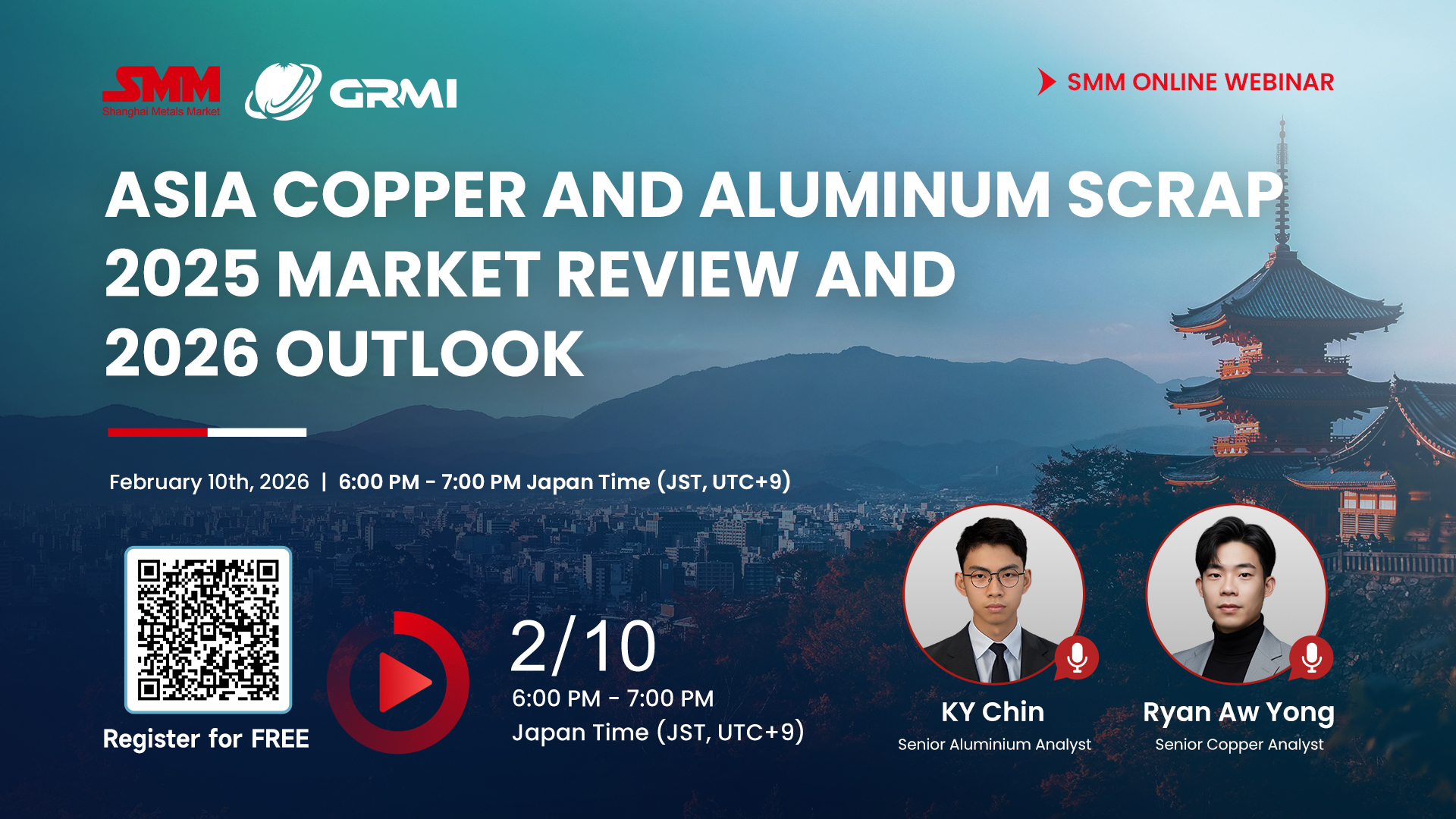
 Host:Shanghai Metals Market
 Date:February 10,2026 17:00 - February 10,2026 18:00 (Beijing Time)
 Location:Teams Online
Highlights:
Asia Copper/Aluminium Scrap Prices & Market
Global Copper/Aluminium Scrap Flow
2026 Scrap Copper/Aluminum Market Outlook
Background:
Asia is now the main destination for global scrap metals, with over half of globally traded scrap flowing into the region. As countries tighten resource security and raw material retention policies, the global scrap trade landscape is undergoing significant structural change. With record-high metal prices and the push for decarbonization, recycled metals have become essential for supply security rather than just cost savings. Across Asia, market shifts are evident: Thailand’s scrap aluminum trade has surged, China has increased reliance on tax-compliant imports, and India’s demand for copper scrap continues to rise. This webinar will highlight the structural changes in Asia’s scrap market and its regional pricing dynamics.
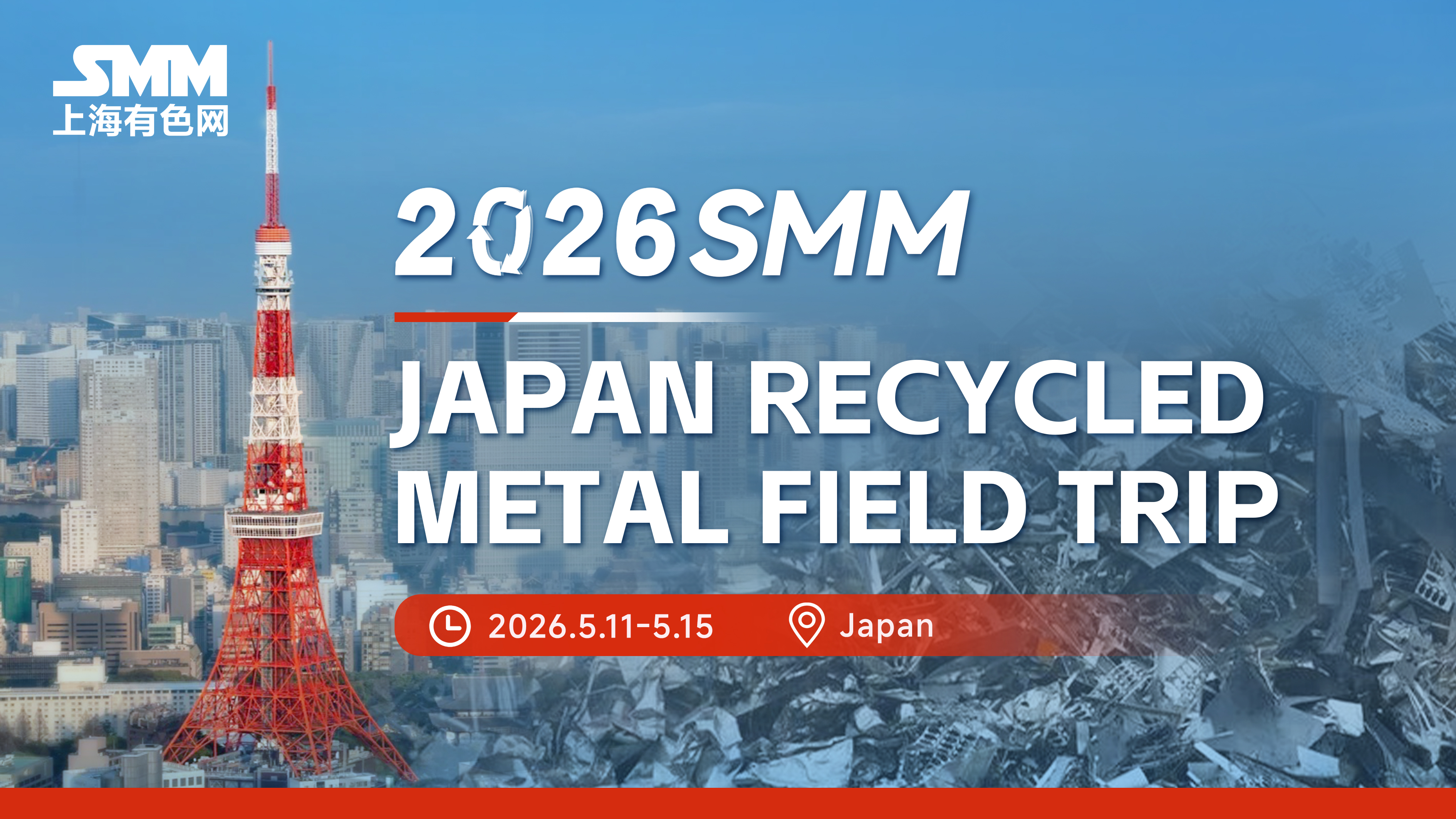
 Host:Shanghai Metals MarketDate:May 11,2026 08:00 - May 15,2026 12:00 (JST Time)Location:Japan
Visiting Companies:
5.13: NODA METAL Co.,Ltd, NODA METAL Co.,Ltd,
5.14: TOYO TRADING Co.,Ltd, KINKI SANGYO Co., Ltd.
5.15: Wakoh Metal Co.,Ltd
Driven by the dual carbon goals and the circular economy strategy, China's secondary copper and aluminum industry faces both opportunities and challenges. In 2024, the total domestic supply of aluminum scrap exceeded 10 million mt, while copper scrap surpassed 4.15 million mt. However, the supply-demand gap remains prominent—domestic recycling volume of aluminum scrap accounted for only 84.4% of the total raw material supply, and that of copper scrap was only 34.4%, indicating a high reliance on imports.
Japan, as a key recycling hub in Asia, possesses three major advantages: First, it has abundant resource endowments, generating over 1 million mt of aluminum scrap annually, more than 70% of which is high-grade socially sourced scrap. In June 2024, the government announced an investment of 30 billion yen, with plans to build 10 e-waste recycling facilities within three years, focusing on the recovery of copper and rare metals. Second, Japan leads in technology, with advancements in shredding and sorting, non-hazardous treatment of aluminum dross (such as Asahi Seizen technology), and closed-loop recycling models for automobiles, which can drive breakthroughs in high-end applications. By 2030, Japan aims to achieve an e-waste recycling target of 500,000 mt, a 50% increase from 2020. Third, its geographical proximity helps reduce transportation costs.
However, despite the import policy relaxation in November 2024, which eased restrictions on secondary aluminum and copper alloy categories, price disparities between the Chinese and Japanese markets persist. For instance, Japanese aluminum window and door scrap prices, including taxes and delivered to port, were 500 yuan/mt higher than domestic prices, while bare bright copper was 800–1,000 yuan/mt higher. As a result, in 2024, imports of aluminum scrap from Japan accounted for only 13.23% of China's total imports, and copper scrap imports from Japan made up 12.08%, highlighting an urgent need to enhance supply chain resilience.
Contact Us:
Cindy Zhang
Tel/WA: +86 19379760792
Email: zhangxiaoyao@smm.cn